
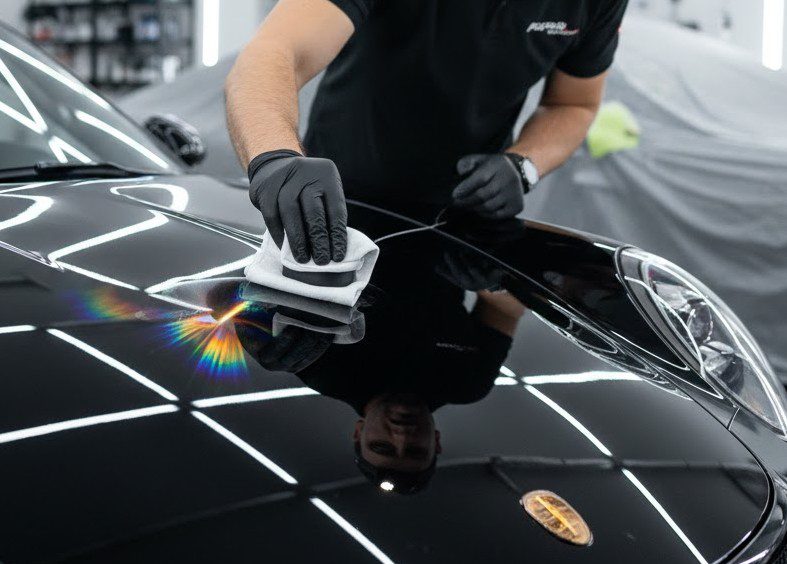
PPF vs. Ceramic Coating: Which One Actually Stops a Stone Chip? (The Definitive Guide)
If you’re researching how to protect your car’s paint, you’ve likely seen two terms everywhere: Paint Protection Film (PPF) and Ceramic Coating.
But here’s the truth: they are often confused, and they offer vastly different types of protection. One is a physical shield; the other is a chemical sealant.
At CYS Films, we believe in clarity. Here is the definitive guide to understanding which product does what—and which one you absolutely need.
1. Ceramic Coating: The Ultimate Sacrificial Seal
What It Is
Ceramic Coating (or Nano-Ceramic Coating) is a liquid polymer applied by hand to a vehicle’s exterior. The coating chemically bonds with the factory paint, creating a hard, hydrophobic layer.
What It Does Well (The Chemical Defense)
Insane Gloss: It drastically deepens the paint’s reflection, providing a “wet-look” shine.
Hydrophobic Properties: Water beads up and rolls off, making washing incredibly easy.
Chemical Resistance: It protects against bird droppings, acid rain, and road chemicals from etching the clear coat.
What It CANNOT Do (The Limitation)
Ceramic Coating is measured in microns. It’s incredibly thin. It offers ZERO defense against physical impact. A small stone chip hitting the coating will break through to the paint underneath.
Analogy: Think of Ceramic Coating as a very durable, invisible coat of nail polish. It’s hard, it shines, and it resists chemicals, but it won’t stop a hammer.
2. Paint Protection Film (PPF): The Physical Shield
What It Is
PPF is a thick (typically 6-10 mils), flexible, thermoplastic film made from TPU (Thermoplastic Polyurethane). It is essentially a high-tech screen protector for your car.
What It Does Well (The Physical Defense)
Stops Stone Chips: Its thickness and elasticity absorb the impact of gravel and road debris, preventing paint damage.
Self-Healing: The flexible TPU film (like CYS’s Lubrizol base) uses heat to repair light scratches and swirl marks instantly.
Non-Yellowing: Modern PPF is guaranteed to maintain clarity and color.
Analogy: PPF is a military-grade, self-healing phone screen protector for your vehicle. You might scratch the film, but the screen (your factory paint) remains perfect.
3. The Stone Chip Test: The Critical Difference
To cut through the confusion, remember this simple test:
| Protection Type | The Impact Test (What happens when a rock hits?) | The Result |
| Ceramic Coating | The rock penetrates the micron-thin coating, leaving a chip or scratch on the paint below. | Paint Damage Occurs. |
| CYS PPF | The TPU film stretches to absorb the impact, then the self-healing layer closes the temporary indentation. | Zero Paint Damage. |
This is why, despite being more expensive upfront, PPF is the only true physical insurance for your car’s most vulnerable areas (hood, fenders, mirrors).
4. The CYS Recommendation: The Ultimate Protection
The best protection is achieved when you combine the strengths of both, but if you have to choose, the order is clear.
Our Expert Advice: PPF First
1.Mandatory PPF: Install CYS PPF on the front end and high-impact areas (hood, bumper, fenders) to stop physical damage.
2.Optional Ceramic: Apply a Ceramic Coating to the rest of the car’s panels and over the PPF for enhanced gloss and easier cleaning. (Yes, you can ceramic coat PPF!)
The CYS Value Proposition
With CYS Color PPF, you get the self-healing protection of TPU film combined with an incredible, high-gloss finish—all for up to 50% less than international clear film brands. You are investing in genuine physical protection without sacrificing aesthetics.
Don’t buy a product that just makes a scratch look shiny. Buy a product that stops the scratch from happening in the first place.
🛡️ Ready to Protect Your Investment?
Stop worrying about stone chips and scratches. Book your free consultation to see why CYS PPF is the smartest investment for your car’s long-term value and finish!