
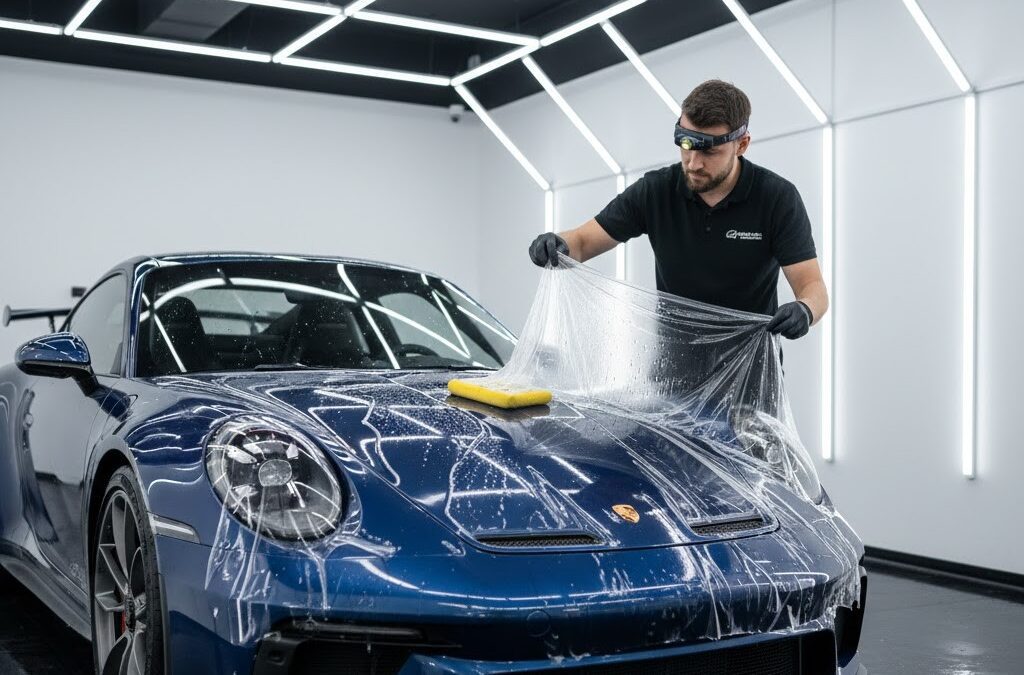
TPU vs. TPH vs. PVC PPF: The Ultimate Paint Protection Film Comparison
Meta Description: Confused about Paint Protection Film (PPF) materials? We break down the key differences between TPU (The Gold Standard), TPH (The Budget Hybrid), and PVC (The Outdated Option), focusing on self-healing, anti-yellowing, and durability.
Choosing the right Paint Protection Film (PPF) for your vehicle is one of the most important decisions for preserving its finish and resale value. However, the market is crowded with acronyms TPU, TPH, and PVC. Leaving many car owners confused.
The material of your PPF dictates its performance, lifespan, and most critically, its ability to resist yellowing and repair itself from scratches.
Here is a clear, concise breakdown of the three main PPF materials and why the difference matters to your car’s long-term health.
1. The Gold Standard: TPU (Thermoplastic Polyurethane)
TPU is the undisputed top-tier material in the PPF industry. It is a highly advanced elastomer (a polymer with elastic properties) known for its durability, flexibility, and unique properties.
Key Features of TPU PPF:
Self-Healing: This is the most famous feature. TPU contains elastomeric polymers that allow the film to return to its original shape when exposed to heat (like warm water or sunlight). Minor swirl marks and light scratches literally disappear.
Superior Flexibility: TPU is incredibly pliable and stretchy, making installation seamless on complex curves, bumpers, and edges without lifting or wrinkling.
Anti-Yellowing (UV Resistance): High-quality TPU films are made with an aliphatic polyurethane base that is UV-stable. This means they are engineered to resist yellowing, cracking, and chalking, maintaining pristine clarity for their entire lifespan.
Lifespan: 5 to 10 years (often backed by a manufacturer’s warranty).
Cost: Highest initial investment.
2. The Budget Hybrid: TPH (Thermoplastic Polyolefin Hybrid)
TPH is an affordable alternative, often marketed as a “TPU-like” film. It is a hybrid material that typically uses a PVC base with added plasticizers or polymer blends to mimic some of TPU’s flexibility.
Key Features of TPH PPF:
Limited Self-Healing: Most TPH films offer very limited or no true self-healing properties. While they are better than PVC, scratches remain visible and require professional repair or replacement.
Moderate Flexibility: TPH is more flexible than PVC, allowing for easier application on moderately curved surfaces, but it will struggle with complex areas where TPU excels.
Prone to Yellowing: Because TPH often contains a PVC element and plasticizers, it is significantly more prone to yellowing under UV exposure than TPU. The plasticizers can break down, causing discoloration.
Lifespan: 2 to 5 years.
Cost: Medium (More affordable than TPU).
3. The Outdated Option: PVC (Polyvinyl Chloride)
PVC is the original, first-generation material for PPF and vinyl wraps. It is the cheapest option but comes with severe performance trade-offs.
Key Features of PVC PPF:
No Self-Healing: PVC is a rigid, non-elastic plastic that has no ability to self-repair. Any scratch or swirl mark is permanent.
Rigidity: It is stiff and brittle, making it very difficult to install perfectly on curved surfaces. It is prone to cracking and hardening over time, especially in hot climates.
Rapid Yellowing: PVC is the least UV-resistant material and is notorious for turning yellow or cloudy quickly sometimes within 1-2 years. Especially when applied to white or light-colored cars.
Lifespan: 1 to 2 years.
Cost: Lowest initial investment, but highest long-term cost due to frequent replacement.
Performance and Cost Comparison at a Glance
The following table summarizes the key performance indicators for each material.
| Feature | TPU (Thermoplastic Polyurethane) | TPH (Thermoplastic Hybrid) | PVC (Polyvinyl Chloride) |
| Material Quality | Premium Elastomer | Hybrid (PVC Base + Additives) | Basic Plastic Polymer |
| Self-Healing | Yes (Heat-Activated) | Minimal to None | No |
| UV Resistance | Excellent (Aliphatic) | Moderate (Prone to Yellowing) | Poor (Yellows Quickly) |
| Durability / Lifespan | 5–10 Years | 2–5 Years | 1–2 Years |
| Flexibility / Fit | Excellent (Ideal for Curves) | Moderate | Poor (Brittle/Rigid) |
| Optical Clarity | Excellent | Good (May Haze Over Time) | Fair (Lowest Clarity) |
| Cost | High | Medium | Low |
Deep Dive: The Yellowing Factor 🧪
The main reason for the vast difference in longevity and yellowing comes down to the chemical structure and the use of plasticizers.
Why TPU Stays Clear
High-quality TPU is based on aliphatic polyurethane. The term aliphatic means the polymer chain contains no aromatic rings, which are the chemical structures responsible for reacting with UV radiation (sunlight) and causing the material to yellow. TPU is chemically stable against UV rays, allowing it to maintain perfect clarity for up to a decade.
Why PVC and TPH Yellow
PVC’s Chemical Structure: PVC is based on a polymer that is naturally rigid. To make it flexible enough for a car, manufacturers add large amounts of plasticizers. These plasticizers are not UV stable; they break down, release gasses, and react with UV light, causing the film to degrade and quickly turn a noticeable yellow or brown tint.
TPH’s Hybrid Nature: While TPH is an improvement over pure PVC, it is still a hybrid that often contains PVC elements or relies on similar non-UV-stable plasticizers to gain flexibility. This makes it a transitional material. It yellows slower than PVC but significantly faster than premium TPU.
Final Verdict: Which PPF Should You Choose?
The choice ultimately depends on your budget and how long you plan to keep your vehicle.
✅ Choose TPU if: You own a luxury or new vehicle, plan to keep the car long-term (5+ years), and want the absolute best protection, self-healing, and perfect visual clarity.
⚠️ Choose TPH if: You have a strict budget but want slightly better protection than vinyl/PVC for the short term, or if you are only protecting a temporary or leased vehicle.
❌ Avoid PVC: While tempting due to the low price, the short lifespan, lack of self-healing, and almost guaranteed yellowing make PVC a poor long-term investment that can sometimes cause paint damage upon brittle removal.