
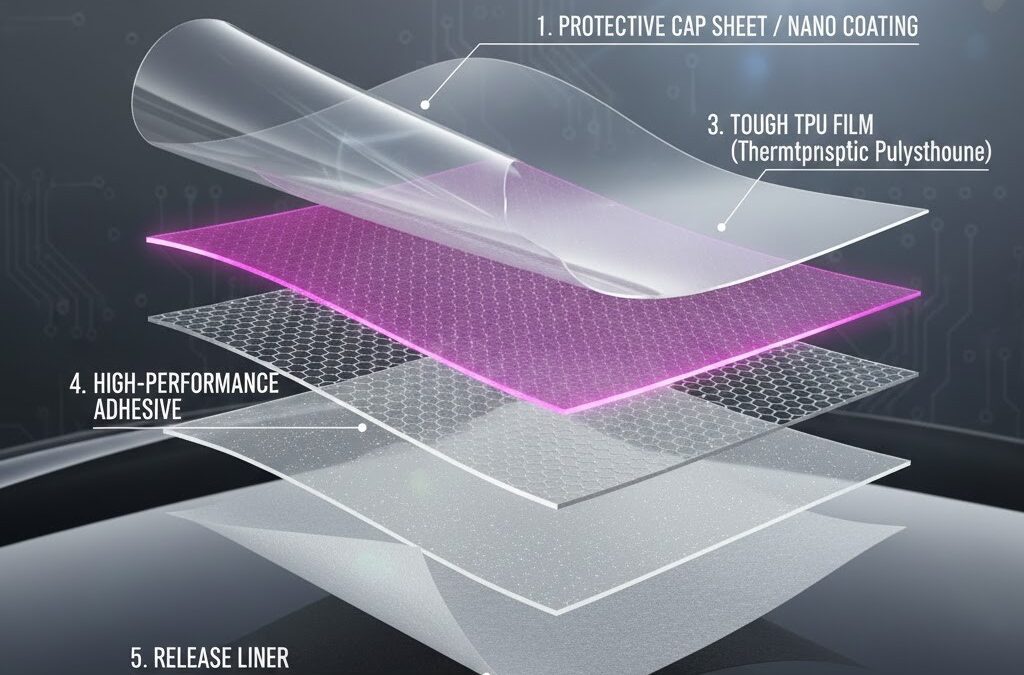
What is Paint Protection Film (PPF)?
Paint Protection Film (PPF) is a thick, highly durable, thermoplastic urethane film applied to a vehicle’s painted surfaces. Its purpose is to act as a sacrificial layer that physically absorbs damage from external hazards, preventing them from reaching the car’s original factory paint.
Often called “clear film,” high-quality modern PPF is virtually invisible when professionally installed. It is the most robust form of paint protection available, superior to any wax or ceramic coating because it offers true physical defense.
The Core Difference: TPU vs. The Rest
The effectiveness of PPF is entirely determined by its material composition. Do not settle for anything less than TPU.
| Material | Full Name | CYS Standard | Key Difference | Lifespan |
| TPU | Thermoplastic Polyurethane | YES (Lubrizol Based) | Highly flexible, self-healing, non-yellowing. | 7-10 Years |
| TPH | Thermoplastic Hybrid (PVC Blend) | NO | Rigid, less elastic, poor clarity, fades faster. | 1-3 Years |
| PVC | Polyvinyl Chloride | NO | Cheap, stiff, lacks self-healing, turns yellow quickly. | 1-2 Years |
CYS Films uses only high-grade TPU films because they possess the two critical features that cheaper films (TPH/PVC) lack: flexibility for application on complex car contours and the ability to self-heal.
The 3 Superpowers of Modern PPF
Modern TPU film is engineered with multi-layered technology to provide active, long-term protection, especially crucial for driving in high-traffic, debris-filled environments like the Klang Valley.
1. Physical Impact Resistance (The Shield)
The most important function of PPF is its thickness (typically 7.5 to 10 mil or 200-250 microns). This elastomeric layer is tough enough to absorb and dissipate the force of:
Rock Chips: The primary enemy of car paint. PPF stops the impact force from chipping your clear coat and paint.
Minor Scratches & Swirl Marks: Fine scratches and swirl marks from daily washing are absorbed by the film, not your paint.
Bug Splatters & Bird Droppings: These highly acidic contaminants sit on the film, not the paint, preventing etching and staining.
2. Self-Healing Technology (The Memory)
This is the magic behind high-quality PPF. The top coat is made of an elastomeric polymer that has a “memory” effect .
How it Works: When the film sustains a minor scratch, the polymer chains are momentarily displaced. When exposed to heat (from the sun, engine heat, or warm water), the polymers become malleable and “flow” back into their original, smooth state, erasing the scratch completely.
Result: You don’t need to polish or worry about minor surface abrasions; the film repairs itself.
3. UV and Chemical Defense (The Longevity)
PPF is formulated with UV inhibitors that protect your car’s underlying paint from fading and oxidation caused by the intense Malaysian sun. Furthermore, a high-quality TPU film is resistant to chemical staining from:
Petrol/Diesel spills
Acid rain
Washing chemicals
This ensures your original paint remains perfectly factory-fresh for the life of the film.
Why Choose CYS PPF? (Clear or Color)
PPF is not just protection; it is an investment that preserves your vehicle’s resale value, as buyers prioritize vehicles with flawless original paint.
Guaranteed Quality Material: We use superior, non-yellowing TPU material in both our clear and Color PPF wraps.
Aesthetic Upgrade: You can choose invisible Clear PPF or our signature Color PPF to achieve a custom look that is protected—for a fraction of the cost of a custom luxury paint job.
The CYS Warranty Advantage: We back our warranty with 5 Free Maintenance Sessions to ensure your film is always inspected and cared for by our Sifu Installers, preventing common claims of “user negligence” that void other warranties.
Ready to protect your investment and preserve its showroom shine?
You should choose a TPU film over TPH, as this video explains the fundamental differences between them:
Paint Protection Film | Difference between TPU & TPH material